
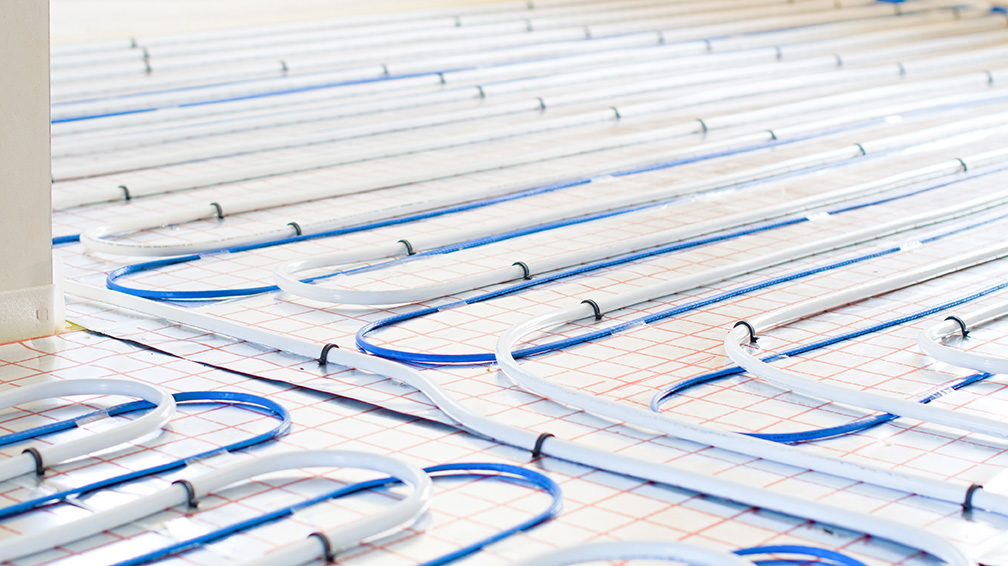
If you are thinking about underfloor heating, the first question is usually how much it costs. The answer depends on the type of system, the size of the area and whether you are fitting it in a new extension or an existing home.
In this guide, we explain typical underfloor heating costs in 2026, the difference between wet and electric systems, what affects the final price, and what it costs to run.
Average Underfloor Heating Costs in the UK
Based on 2026 UK cost guides, typical installed prices outside London are:
| System | New build or extension | Existing home (retrofit) |
|---|---|---|
| Wet (water) | £100 to £140 per m² | £150 to £190 per m² |
| Electric | £40 to £80 per m² | £50 to £90 per m² |
As a rough guide for a single room:
These figures usually include pipework or heating mats, insulation, the manifold and pump for wet systems, basic thermostats and labour. Floor finishes, major floor preparation and any boiler or heat pump upgrade are normally extra.
Be cautious of quotes that look much lower. Underfloor heating needs proper heat loss calculations and pipe layouts, and mistakes are expensive to put right once the floor is down.
Wet vs Electric Underfloor Heating Costs
Electric underfloor heating is cheaper and quicker to install. Thin heating mats are laid under tiles with a low build-up height, so it is popular for bathrooms, en-suites and small kitchens. The downside is running cost, because it heats directly from mains electricity.
Wet underfloor heating costs more to install because it involves pipework, a manifold and usually screed or overlay boards. It is far cheaper to run over larger areas, and it works with gas, oil and LPG boilers as well as heat pumps. For extensions, open-plan spaces and whole floors, wet systems are almost always the better long-term choice.

What Affects the Cost of Underfloor Heating?
No two projects are the same. These are the main factors that affect the final price.
New build or existing home
Installing underfloor heating in a new extension or new build is the most cost-effective option, because the pipes go in before the screed. Retrofitting into an existing home costs more, as floors may need lifting, insulating or raising.
Floor type
On solid floors, pipes are usually laid in screed or on low-profile overlay boards. On suspended timber floors, pipes are fitted between the joists with spreader plates. Overlay systems avoid long screed drying times but cost more per square metre.
Size of the area
Larger areas cost more overall but usually less per square metre, as the manifold and controls are a fixed cost spread across more floor.
Your heat source
Wet underfloor heating connects to your boiler or heat pump. A combi or system boiler needs a mixing valve to bring the water temperature down. If you are planning a heat pump, it makes sense to design both together.
Controls and zoning
Each room or zone needs its own thermostat. Basic thermostats are inexpensive, while smart controls add cost but give you more control over comfort and running costs.
Insulation
Good insulation under the pipes is essential, so heat goes up into the room rather than down into the ground. Older properties may need extra insulation, which adds to the cost but improves efficiency.
Is Underfloor Heating Expensive to Run?
Wet underfloor heating is usually cheaper to run than radiators. It works at around 30 to 45°C, compared with 65 to 75°C for a typical radiator system, and heats the room evenly from the floor up. Industry estimates suggest it can use around 15 to 40% less energy than radiators, depending on the property and heat source.
Electric underfloor heating costs more to run. As a guide, heating a 20m² room for a year costs roughly:
Actual running costs depend on energy prices, insulation, floor coverings and how you use the heating. The savings are greatest when wet underfloor heating is paired with a heat pump.
Underfloor Heating vs Radiators: Which Costs Less?
Radiators are cheaper to fit in an existing room, especially if your current radiators and pipework are in good condition. Underfloor heating costs more upfront but gives more even warmth, frees up wall space and is usually cheaper to run.
Many homes use both: underfloor heating downstairs or in a new extension, with radiators upstairs. A good heating engineer can design a system that combines the two and runs them at the right temperatures.
Why Design and Installation Quality Matter
Underfloor heating is built into your floor, so it needs to be right first time. A properly designed system starts with room-by-room heat loss calculations, the correct pipe spacing and a balanced manifold. Every circuit should be pressure tested before the floor is finished. Choosing an experienced heating engineer for your underfloor heating installation protects your investment and keeps running costs as low as possible.
Frequently Asked Questions
How much does underfloor heating cost per m²?
Wet underfloor heating typically costs £100 to £140 per m² in a new build or extension, and £150 to £190 per m² as a retrofit. Electric systems typically cost £40 to £90 per m².
Can you retrofit underfloor heating in an existing home?
Yes. Low-profile overlay boards can be laid over solid floors, and pipes can be fitted between the joists on suspended timber floors. Retrofitting costs more than a new build installation.
Can I get a grant for underfloor heating?
Not on its own. The Boiler Upgrade Scheme covers heat pumps, not underfloor heating, but the heat pump in a combined system may qualify.
How long does it take to install underfloor heating?
Electric systems usually take one to two days per room. Wet systems take around two to four days per room, plus drying time if a traditional screed is used.
Cost figures are typical UK ranges outside London, based on 2026 cost guides from MyJobQuote, Housekeep and Book a Builder. Your actual cost will depend on your property.